
In modern high-end residential design, materials are no longer viewed simply as decorative finishes. Instead, they have become one of the key factors that define spatial atmosphere, living experience, and the overall sense of sophistication within a home. Particularly in contemporary minimalist interiors, increasing attention is being placed on the balance between materials and the emotional qualities they bring to a space.
When exploring Integrated Custom Doors, Walls & Cabinets, homeowners often encounter terms such as “sintered stone,” “PET,” “wood veneer,” and “high-end panel systems.” However, these materials do not belong to the same category. Some are surface finishes, some are decorative materials, while others represent complete high-end panel systems.
Understanding the differences between them is also essential to understanding the material logic behind contemporary luxury residences.
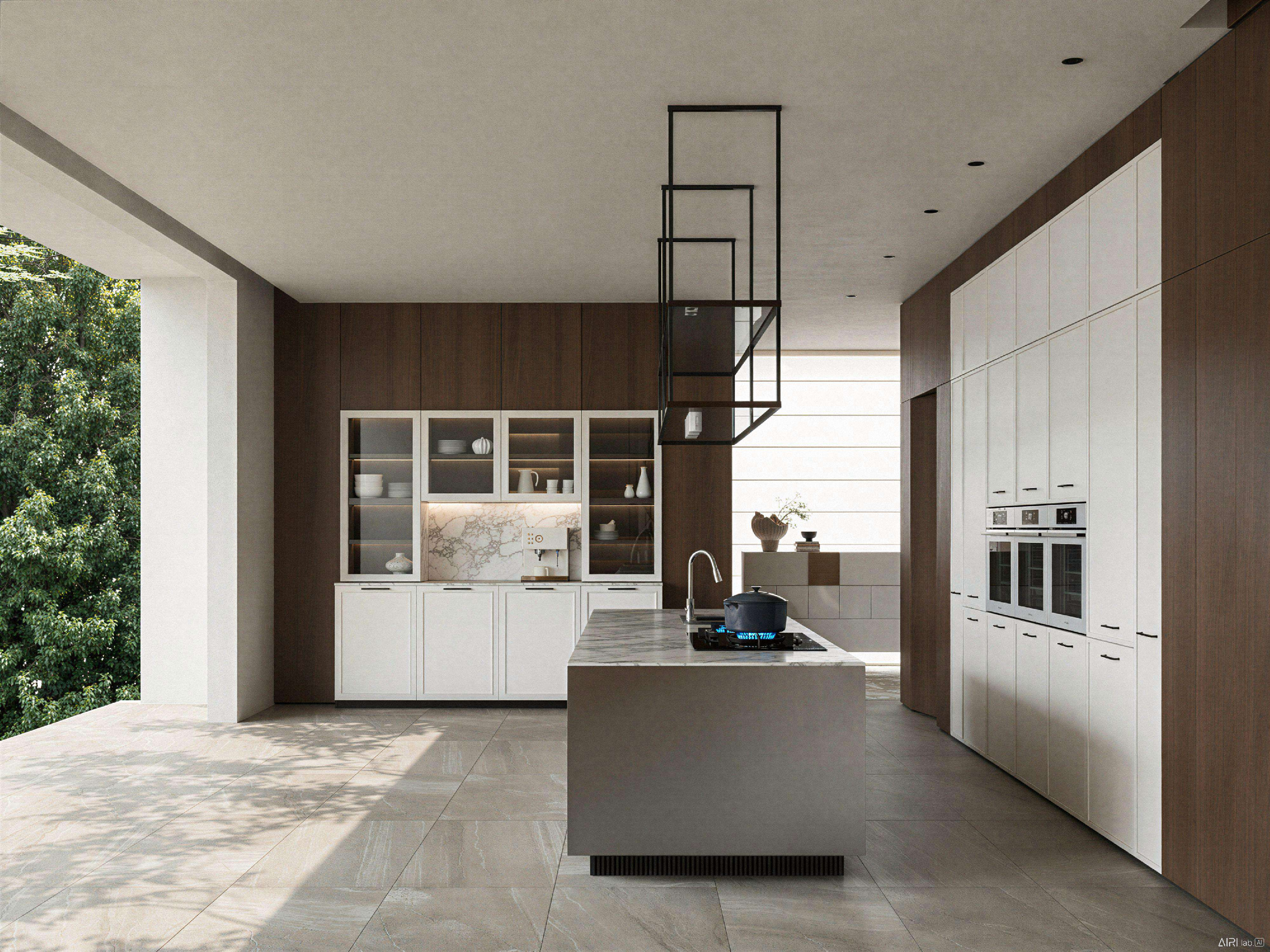
In modern homes, sintered stone is generally considered a high-performance surface material rather than a traditional panel product. Manufactured under extremely high temperatures and pressure, sintered stone offers exceptional density and durability. Today, it is widely used for kitchen islands, countertops, dining tables, feature walls, and bathroom surfaces, especially in modern minimalist interiors.
One of the greatest advantages of sintered stone is its ability to combine strong functionality with architectural aesthetics. Compared with traditional stone materials, sintered stone offers excellent resistance to heat, scratches, stains, and moisture penetration, while also creating large, seamless surfaces with a strong sense of spatial continuity. In open-plan homes, oversized sintered stone islands often become sculptural centerpieces that enhance both spatial order and architectural presence, which is why they have become increasingly popular in luxury residential projects.
At the same time, sintered stone demands highly precise craftsmanship. Premium projects often emphasize 45-degree mitred edges, seamless corner transitions, and continuous veining patterns, as these details significantly affect the final level of refinement within the space.
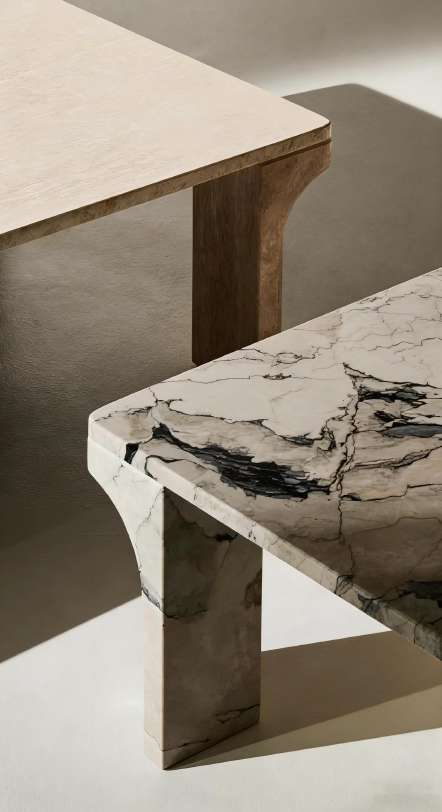
In contrast, PET is one of the most widely used cabinet surface materials in contemporary high-end interiors. In recent years, PET finishes have become increasingly common in modern minimalist, soft contemporary, and luxury residential projects. Its greatest strength lies in its soft and refined surface texture, combined with strong anti-fingerprint performance, making it particularly suitable for large cabinetry systems.
Modern minimalist spaces require exceptionally clean cabinet surfaces because highly reflective finishes, visible fingerprints, or inconsistent coloring can quickly disrupt the purity of a space. PET surfaces typically feature a smooth matte texture that feels visually calm and restrained, while also offering excellent stability, durability, and environmental performance compared to traditional lacquer finishes.
For this reason, PET has become a popular material choice for wardrobes, kitchen cabinetry, and storage systems in many contemporary Australian luxury homes, especially in white and warm grey color palettes.
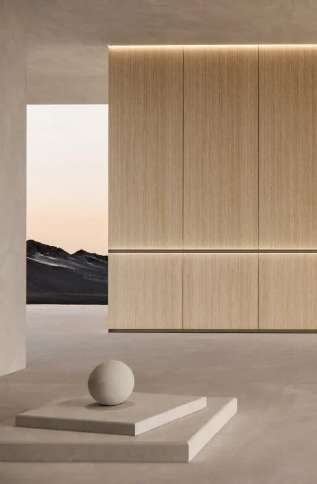
If PET represents the sense of purity within modern minimalist interiors, then wood veneer represents warmth and natural character.
Wood veneer is created by slicing natural timber into thin sheets and applying them to panel surfaces, allowing the authentic grain and texture of real wood to remain visible. This natural quality is precisely why wood veneer continues to be one of the most timeless and luxurious materials in high-end residential design.
Although minimalist interiors emphasize restraint and simplicity, spaces composed entirely of cool-toned materials can often feel emotionally cold. As a result, more luxury homes are incorporating wood veneer systems to introduce warmth and balance into the environment. Whether walnut, oak, or ash wood, each timber species brings its own distinct atmosphere and personality. The subtle variation of natural wood grain also allows minimalist spaces to feel softer, richer, and more comfortable while still maintaining visual purity.
However, wood veneer also requires a high level of craftsmanship and installation precision. Since natural timber contains inherent variation in grain and color, premium projects often focus heavily on grain matching techniques, ensuring visual continuity across cabinetry, wall panels, and architectural elements. In well-executed veneer systems, the wood grain appears to flow naturally throughout the space rather than feeling fragmented.
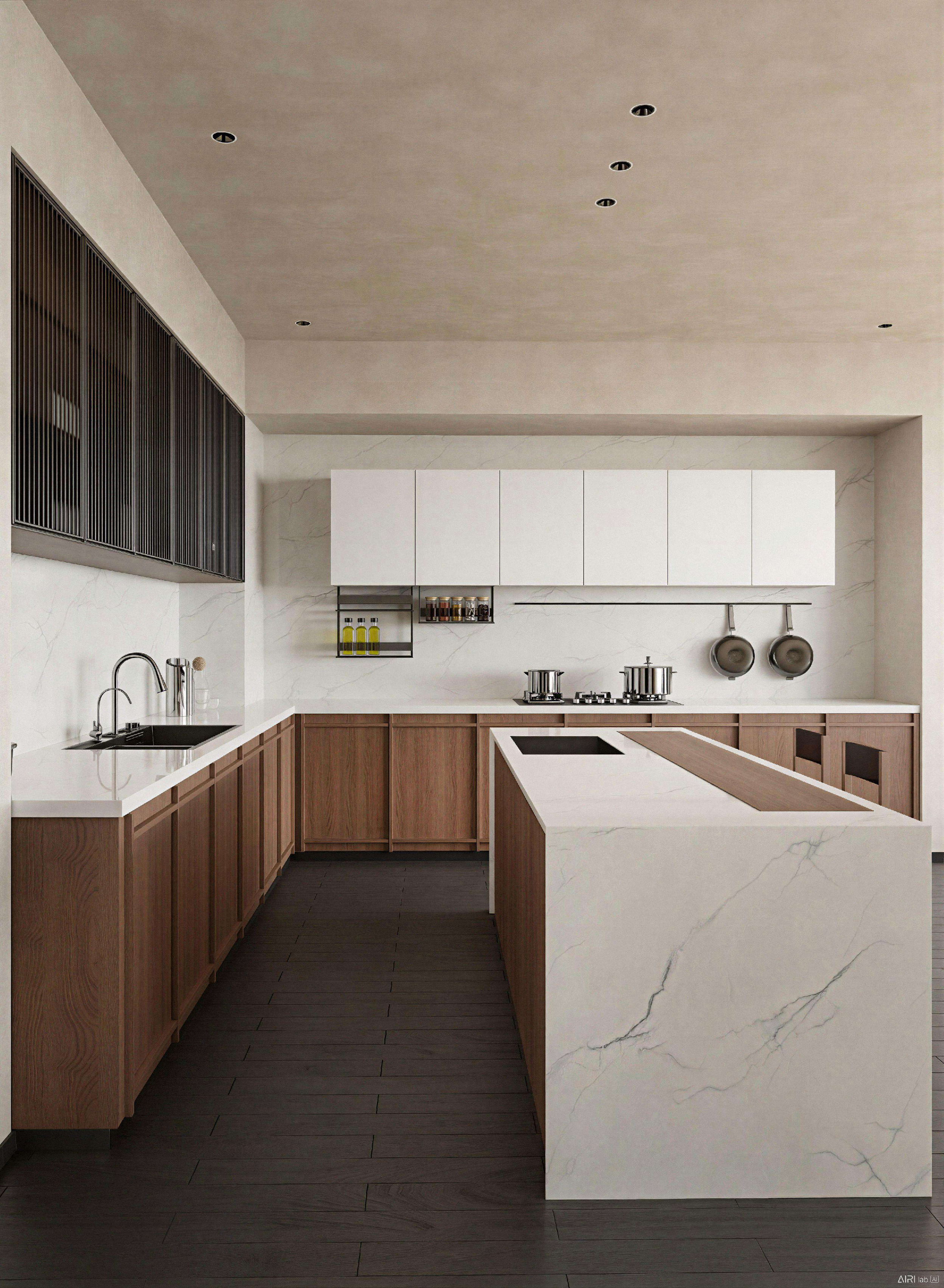
Unlike the previous materials, “high-end panel systems” do not refer to one specific material, but rather to a complete premium panel solution used in luxury customization projects.
Today, many high-end residences incorporate ENF-grade eco-friendly substrates, F4-star panels, synchronized wood grain finishes, ultra-soft-touch panels, and imported German panel systems as part of their cabinetry solutions. Compared to standard panels, high-end systems place greater emphasis on environmental standards, structural stability, surface quality, and compatibility with advanced craftsmanship.
Contemporary luxury interiors increasingly prioritize spatial consistency and cohesion, which means high-end panel systems are designed not only around the material itself, but also around how the entire space performs visually over time. Factors such as color consistency, edge-matching precision, material coordination, and long-term durability all contribute directly to the overall perception of quality.
In reality, truly sophisticated homes rarely rely on only one material. Contemporary residential design increasingly focuses on the balance between different materials and the unique role each one plays within the space. PET contributes purity and visual consistency, wood veneer introduces warmth and emotional depth, sintered stone reinforces architectural sophistication, while high-end panel systems maintain overall craftsmanship quality and spatial order.
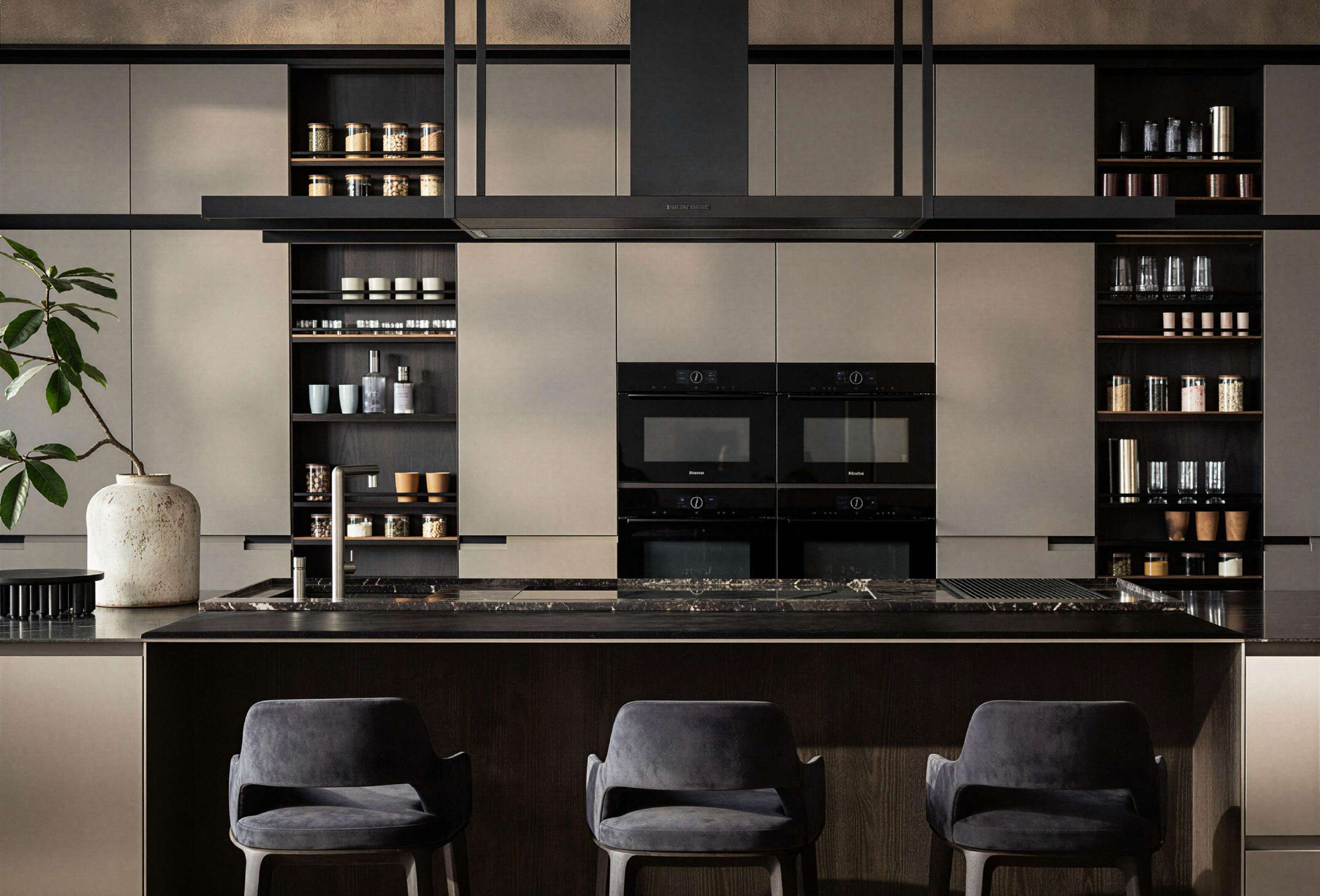
These materials are not competing alternatives, but rather components of a carefully integrated system.
Ultimately, great contemporary interiors are not defined simply by the use of expensive materials, but by how proportion, texture, lighting, and craftsmanship work together within a restrained material palette to create spaces that feel clean, cohesive, and timeless.
This is precisely why, in modern luxury residential design, materials are no longer viewed merely as finishing elements, but as an essential language for shaping lifestyle, atmosphere, and the emotional experience of living.

Block Quote